
All About Deductive Reasoning: CLAT 2022
The CLAT Consortium on November 22, changed the syllabus for CLAT and now subjects like Quantitative Techniques and Deductive Reasoning are part of the exam.
What Is Deductive Reasoning?
It is the process of reasoning from one or more statements (premises) to reach a logically certain conclusion.
In deductive reasoning questions, you must draw conclusions based on only the information given in the question and not your own knowledge.
If the conclusion cannot be drawn from the information given, then the conclusion does not follow. There are several types of questions that evaluate deductive reasoning ability.
The most common types of deductive reasoning questions are syllogisms. A syllogism is a type of logical argument in which a pair of sentences serve as the rules/premises and a third sentence serves as the conclusion.
Example:
All pigeons are black. All black birds are loud. All pigeons are birds.
Statement: All pigeons are loud.
All pigeons are black. All black birds are loud. All pigeons are birds.
Statement: All pigeons are loud.
A: True
B: False
C: Insufficient information
B: False
C: Insufficient information
The correct answer is “true.”
The great thing about deductive reasoning is that if the premises are true, the conclusion must be true. In deductive reasoning, the conclusion must be true if the premises are true.
Analytical Reasoning and Deductive Reasoning
Analytical Reasoning questions require implementing deductive reasoning skills to reach the conclusion. Often, these two types are the same.
Analytical Reasoning questions test a range of deductive reasoning skills:
- Comprehending the basic structure of a set of relationships by determining a complete solution to the problem posed (for example, an acceptable seating arrangement of all six diplomats around a table)
- Reasoning with conditional (“if-then”) statements
- Inferring what could be true or must be true from given facts and rules
- Inferring what could be true or must be true from given facts and rules together with new information presented in hypotheticals
- Recognizing when two statements are logically equivalent in the context.
The whole point of including deductive reasoning is to eradicate the need for prior legal knowledge during CLAT. The test will now be based on the reasoning skills of the candidate, a skill which is empirical for any lawyer.
Some questions like syllogisms and blood relations have always been a part of CLAT under the head of logical reasoning. These will now fall under the deductive reasoning section for CLAT 2020
eg: blood relations
Looking at the portrait of a man, Priyam said, ‘His mother is the wife of my father’s son. Brothers and sisters, I have none’. At whose portrait was Priyam looking?
(1) His cousin (2) His nephew (3) His uncle (4) His Son (5) None of these
Solution:
My (Priyam’s) father’s son will be Priyam himself as he has no brother or sister. Priyam’s wife is the mother of the person in the portrait. The portrait is thus of Priyam’s son. Hence, the answer is (4) His Son.
eg: Syllogism
Statements: Some Cats are Rats. All bats are tables. All Rats are Bats.
Conclusion:
I. Some Cats are bats
II. All bats are rats
III. All tables are cats
IV. All bats are cats
1. Only I & II follow
2. Only II follows
3. Only I & IV follow
4. None of these
Answer: 4
Deductive Reasoning vs. Inductive Reasoning
People often confuse inductive and abductive reasoning with deductive reasoning. These three types of reasoning all fall under the umbrella of logical reasoning.
As explained above, deductive reasoning or deduction is a method in which one applies a certain rule given by a statement or argument to reach specific conclusions. In contrast, inductive reasoning or induction is when a given statement or a set of repetitive occurrences help one define or identify a certain rule.
Deduction: a rule or general principle leads to a specific conclusion.
Induction: a specific example, or a set of repetitive occurrences, lead to a rule or a general principle.
Abductive reasoning, on the other hand, is similar to inductive reasoning in the sense that conclusions are based on probabilities. In abductive reasoning, it is presumed that the most plausible conclusion is the correct one.
How to prepare for deductive reasoning for CLAT 2022
CLAT aspirants have less than 6 months to prepare for a completely new subject and they don’t know where to begin.
This seems to be the common consensus among the people right now but it is not completely true. As mentioned earlier, CLAT aspirants have been attempting questions from logical reasoning for a long time and as a part of it, they have experience with deductive reasoning as well.
Those students who took other entrance tests like Law School Admission Test or LSAT, they have a separate section for analytical reasoning. As mentioned earlier, these two are a lot similar.
Therefore the first and foremost step would be to practice from the sample and past year papers of LSAT. The aspirants of CLAT should solve all the reasoning questions from LSAT papers that are available.
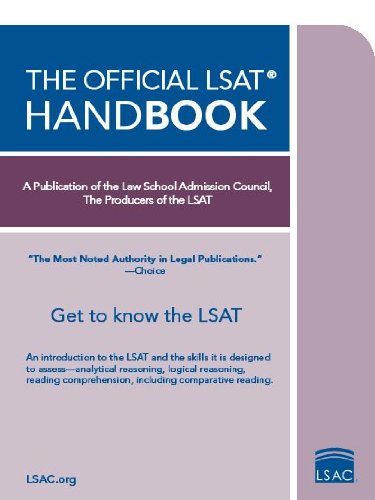
LSAT Handbook
Pro Tip: Since the English section is also going to become a lot similar, the CLAT aspirants should practice from LSAT English section as well. Solve all the questions that ever came in LSAT.
In order to do so, they can visit the official LSAT website.
The students can also refer to the official LSAT guide which is available on amazon.
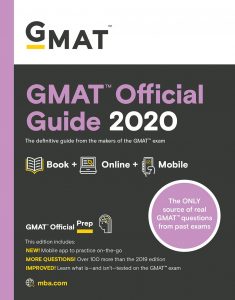
official GMAT Guide
Deductive reasoning is also a part of a plethora of other entrance examinations. These have nothing to do with law but share this common subject in the entrance examination.
GMAT or Graduate Management Admission Test is such an examination. Not only the deductive reasoning but also the English section is similar now that all questions will be comprehension based.
Candidates can also refer to the official GMAT guide available on amazon.
In order to do well in this exam, find the tests which have similar subjects and then solve their sample, past and mock papers.
The idea is to continue practising questions, continue reading and continue learning while moving in the right direction.
Take a shot at our various tests to practice deductive reasoning for CLAT 2022.
Revised and updated on September 6, 2021.
Subscribe for updates
Join 10,000+ subscribers.
AD
Aditya Anand
Contributing author
Have a doubt about this?Ask Doubts
