Edit
TABLE OF CONTENTS
Introduction
Various Modes of Dispute Resolution
Emerging Trends of Online Dispute Resolution (ODR)
Future of Alternative Dispute Resolution
Conclusion
INTRODUCTION
Alternative Dispute Resolution (ADR) has emerged as a significant component of India’s legal landscape, providing an alternative to traditional litigation for resolving disputes. ADR encompasses various methods such as mediation, conciliation, arbitration, and Lok Adalats, which offer flexible and efficient means of dispute resolution. The popularity of ADR in India has grown steadily due to factors like overcrowded courts, lengthy legal proceedings, and rising costs of litigation.
ADR methods offer parties greater control over the outcome, confidentiality, cost effectiveness, and the ability to maintain relationships. This blog explores the different alternative modes of dispute resolution in India and their relevance in addressing the evolving needs of the justice system.
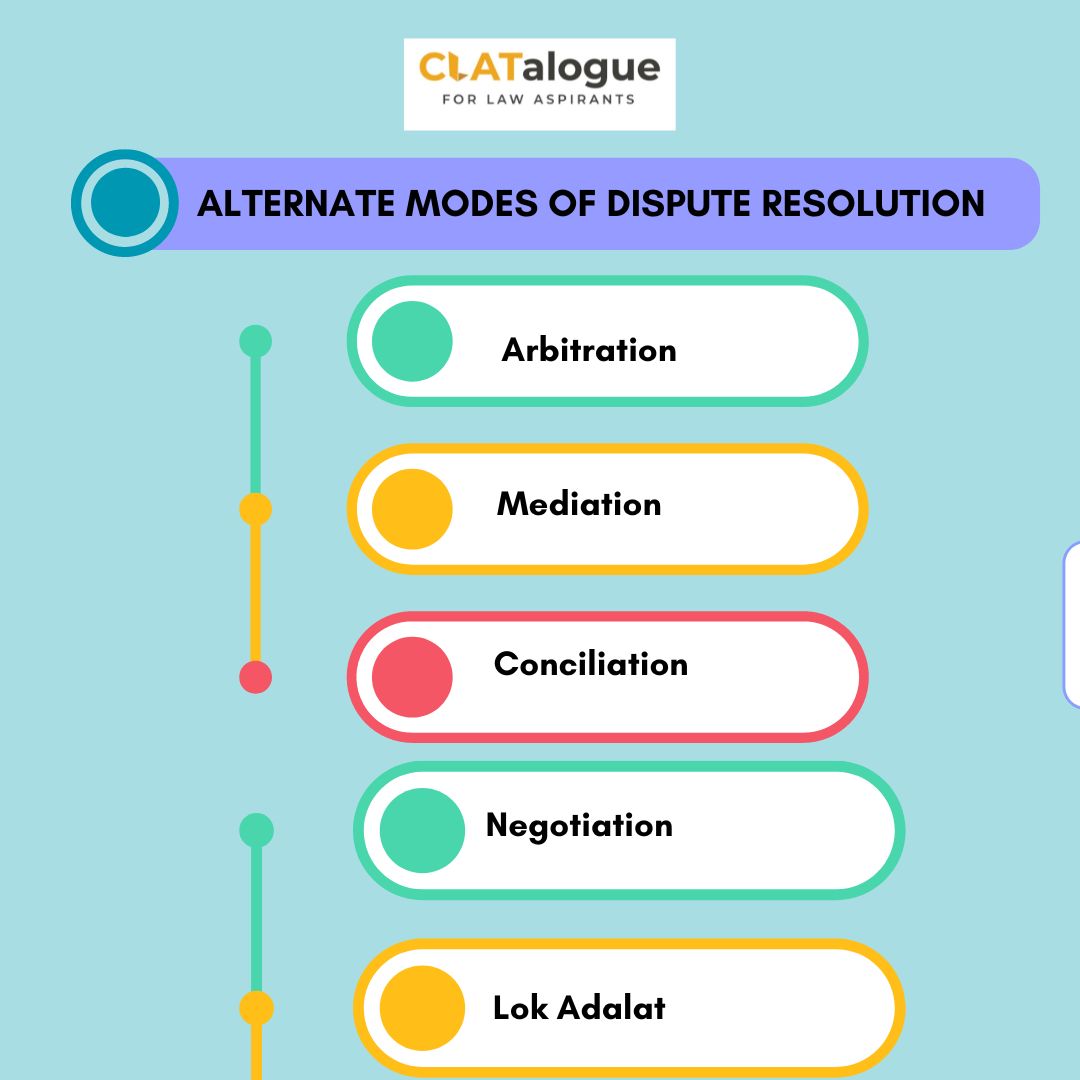
Arbitration, mediation, and negotiation are at least three different types of alternative dispute resolution (ADR). Although conciliation can be regarded as a fourth category, for the purposes of this discussion, it can be viewed as a subset of mediation.
Various Modes of Dispute Resolution
ARBITRATION
In arbitration, the parties to a dispute submit it to one or more individuals known as arbitrators, to whom they expect to be bound by their decision, in order to resolve the conflict outside of the judicial system.
It is a process for resolving conflicts where a neutral third party reviews the evidence and makes a decision that is binding on both parties. There are few avenues for review or appeal of arbitration rulings. Arbitration is distinct from mediation and civil court processes.
Arbitration may be mandatory or discretionary. It is obvious that a jointly signed agreement or law requiring arbitration of all pending or future disputes between the parties is the only source of mandatory arbitration. In India, the provisions of the Arbitration and Conciliation Act, 1996 shall be applicable if the dispute is referred to arbitration.
Mediation is a widely used method of resolving disputes globally, characterized by its non- binding and informal nature. It involves a neutral third party who employs specific communication and negotiation techniques to assist parties in reaching a mutually agreeable resolution.
Mediation is a voluntary, party-centered, and structured negotiation process where the parties retain control. The mediator’s role is limited to facilitating the negotiation and does not involve making decisions or imposing settlements. In mediation, a skilled neutral mediator meets with both sides, allowing each party to present their perspective on the issue and potential solutions.
Negotiation in India follows universal principles but is influenced by cultural factors. It involves communication and discussion to reach mutually satisfactory agreements. Indian negotiators prioritize relationship preservation and harmony. Techniques include active listening, persuasive arguments, finding common ground, and seeking win-win outcomes.
Non-verbal cues and indirect communication play a role. Legal frameworks and alternative dispute resolution methods like mediation are often used. Negotiation in India combines cultural sensitivities, interpersonal skills, and strategic decision-making to achieve mutually beneficial outcomes in various contexts.
CONCILIATION
Conciliation is a consensual alternative dispute resolution process where a neutral conciliator helps parties resolve their issues through negotiation and reaching a mutually acceptable settlement.
It focuses on reducing conflicts, identifying problems, and considering the parties’ interests. The resulting settlement holds legal validity and is applicable in any court. Conciliation is often used in trade disputes to maintain commercial relationships.
LOK ADALATS
One of the ADR processes is Lok Adalat, a forum for the amicable resolution of legal issues and cases that are pending in court or in the preliminary stages of litigation. The Legal Services Authorities Act, 1987 conferred legal status for Lok Adalats. According to the aforementioned Act, the award (judgment) given by the Lok Adalats is deemed to be a decree of a civil court, is final and enforceable against all parties, and no legal recourse against such an award exists.
Emerging Trends of Online Dispute Resolution (ODR)
ODR essentially refers to the use of information and communication technology to provide ADR services or to the application of ADR in an online setting. It makes use of the internet as a more effective platform for parties to settle their differences using a range of ADR techniques that are similar to traditional ADR.
ODR is an emerging trend in India, utilizing digital platforms and technology to resolve disputes online. It offers advantages such as increased accessibility, allowing parties to participate from anywhere with an internet connection, eliminating the need for physical presence.
It provides convenience and flexibility by enabling parties to schedule dispute resolution sessions at their convenience, accommodating personal and professional commitments. It also promotes time efficiency through streamlined communication, instant document exchange, and the availability of digital records for easy review.
In India, various ODR platforms and initiatives like the e-Courts Project, Centre for Alternative Dispute Resolution (CADR), Resolve Disputes Online (RDO), Presolv360, and ODRways cater to the demand for online dispute resolution. With advancing technology and improved connectivity, ODR adoption is expected to grow, revolutionizing dispute resolution by providing accessible, convenient, and time-efficient mechanisms that align with India’s digital transformation initiatives, contributing to an efficient and inclusive justice system.
Future of Alternative Dispute Resolution
To secure a promising future for ADR in India, several key suggestions can be considered.
First, there should be a focus on promoting ADR education and training to enhance understanding and skills among legal professionals and the public.
Second, encouraging the inclusion of ADR clauses in contracts can make it a standard practice.
Third, establishing specialized ADR centers at national and regional levels can provide dedicated resources and support.
Fourth, emphasizing the role of mediation and conciliation can lead to faster resolutions and reduced court burdens.
Fifth, fostering collaboration between ADR institutions and courts can improve integration and efficiency.
Sixth, embracing technology, such as online platforms and virtual hearings, can enhance accessibility and convenience.
Seventh, promoting international ADR initiatives can strengthen India’s global standing in dispute resolution.
By implementing these suggestions, India can pave the way for an effective and efficient ADR system, ensuring a brighter future for alternative dispute resolution in the country.
CONCLUSION
Owing to the development of alternative dispute resolution techniques, people now have a new way to resolve their disputes. Widespread public support for the quick resolution of disputes in Lok Adalat has given ADR a new momentum that will surely result in fewer cases going to court.
ADR processes are crucial for facilitating access to justice. We need to urge the ADR movement to advance more quickly. In addition to providing quick justice at a minimal cost, this will greatly alleviate the pressure on the courts. They will successfully accomplish the goal of giving the disputants social justice if they are completely put into practice.