
An In-Depth Analysis of the Challenges Faced by the Judiciary in India
Edit
TABLE OF CONTENTS
Introduction
Phenomenon of delays in the Judicial System
Insufficient specialization and expertise
Judicial Independence and Accountability
The Appointment of Judges
Improving "Access to Justice"
Judicial Infrastructure and Technology
The Impact of Judicial Reforms on Public Perception
Conclusion
Introduction
The Indian judiciary, being a fundamental component of democracy, performs a crucial function in maintaining the supremacy of the law and protecting the rights and freedoms of the populace. Nevertheless, the system is susceptible to obstacles that impede its effective operation.
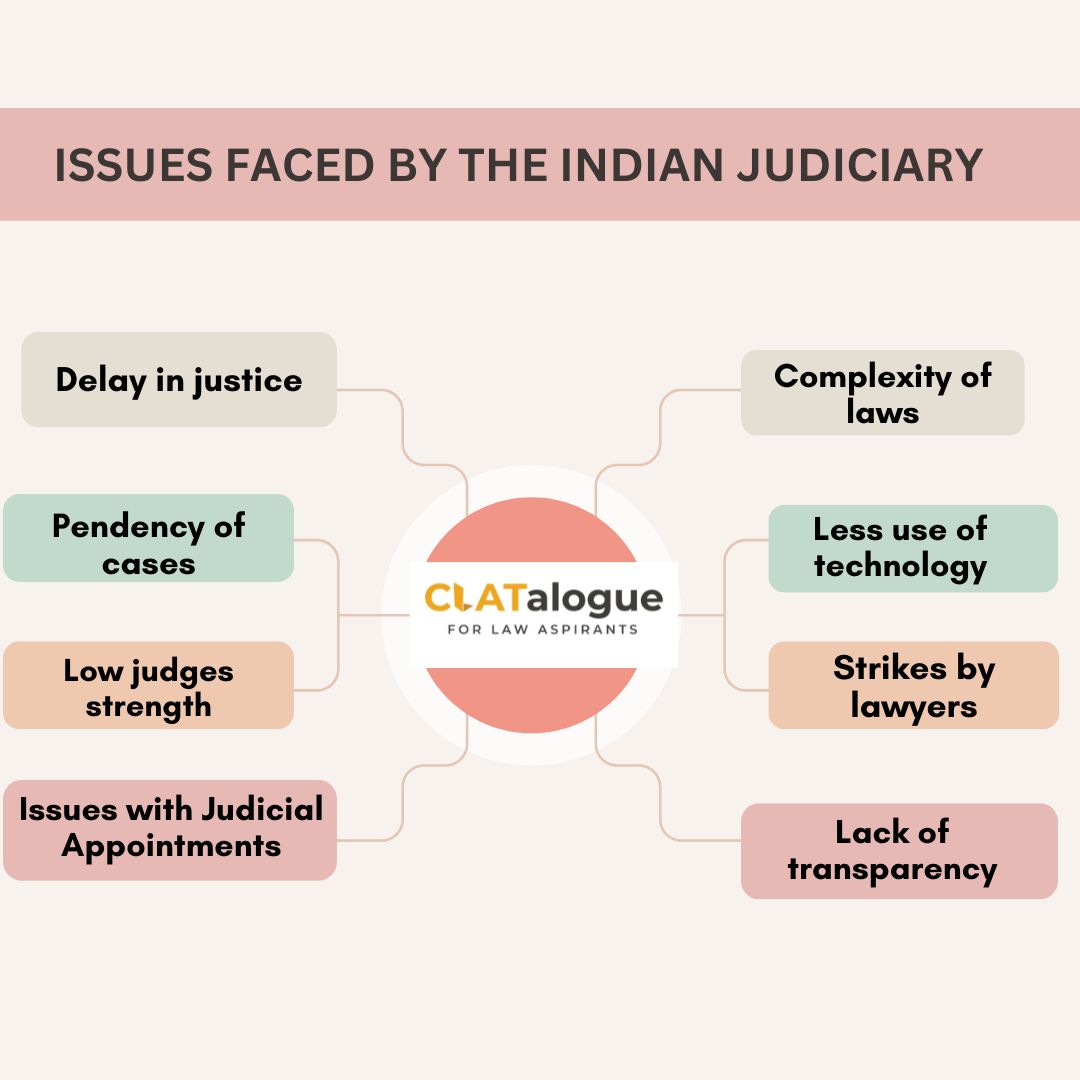
The Indian judiciary faces several challenges that impact its efficiency, effectiveness, and public perception. The objective of this article is to furnish a comprehensive analysis of the challenges affecting the judicial system in India.
Phenomenon of delays in the Judicial System
The Indian judiciary encounters a big obstacle in the form of judicial delays. The delay of justice is attributed to the burdened courts and the accumulation of pending cases. The considerable number of legal cases, in combination with deficient infrastructure and insufficient judicial resources, imposes a burden on the legal system. As a result, litigants are subjected to prolonged waiting periods, leading to a loss of confidence in the judicial system and a denial of justice to those who require it.
The issue of prolonged court proceedings can be attributed to a multitude of factors. The issue is further compounded by the limited availability of judges. India is confronted with a persistent insufficiency of judges, resulting in an unfavorable ratio of judges to population.
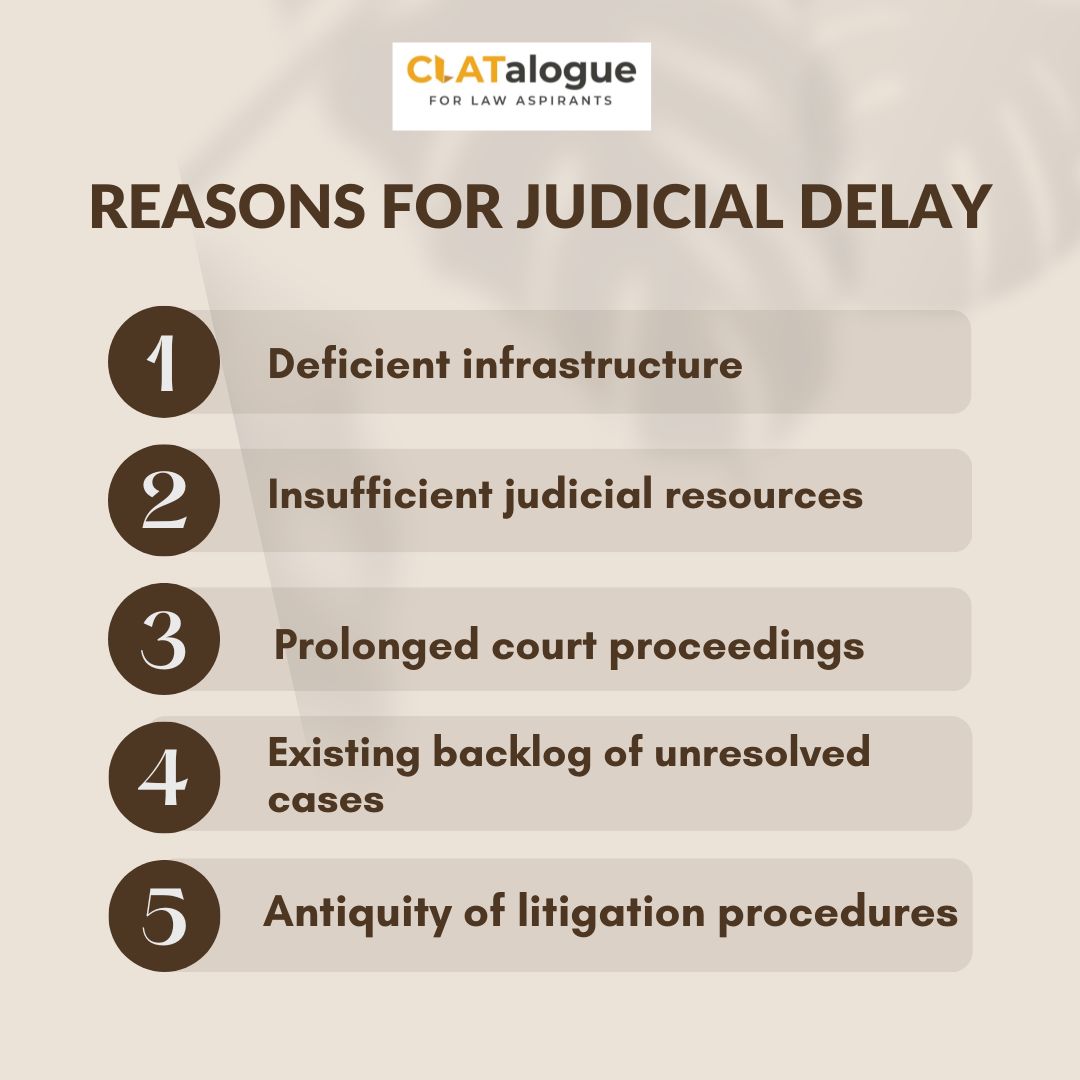
The current state of the High Courts and lower courts in terms of available positions is a cause for concern, as it exacerbates the already existing backlog of unresolved cases. Prompt actions are necessary to tackle this matter, such as accelerating the appointment procedure and augmenting the number of judges to guarantee prompt dispensation of justice.
The antiquity of litigation procedures and the intricacy of the legal system are additional elements that contribute to the prolongation of judicial delays. Ineffective procedural barriers and out-of-date laws impede the judiciary’s ability to function properly in the Indian legal system.
There exist a multitude of laws that have not been rescinded or modified, leading to superfluous intricacies and hindrances. Furthermore, the complexities of procedures frequently result in technicalities taking precedence over the attainment of substantive justice. Optimising legal procedures and modernising legislation are pivotal measures for mitigating the workload on courts and augmenting the efficacy of the judiciary.
Insufficient specialization and expertise
The non-existence of dedicated courts or tribunals for specific legal domains imposes extra weight on the judicial system. Judges possessing specialized expertise are necessary to address matters pertaining to commercial disputes, intellectual property, the environment, and other specialized domains.
The lack of specialization results in inefficiencies and insufficient handling of intricate cases. The implementation of specialized courts and the provision of ongoing training for judges with specialized expertise could potentially improve the efficiency and efficacy of the justice system.
Judicial Independence and Accountability
The preservation of the impartiality of the judiciary is a fundamental requirement for upholding the legitimacy and trustworthiness of the legal framework. Nonetheless, there have been emerging concerns pertaining to the accountability and transparency of the judiciary.
The efficacy of current mechanisms has been called into question due to criticisms surrounding the appointment of judges, transfer policies, and disciplinary proceedings. Achieving a harmonious equilibrium between the autonomy of the judiciary and its answerability to the public via all-encompassing modifications is of paramount importance in bolstering the confidence of the populace in the judicial system.
The Appointment of Judges
The system of collegium [Read details on the Collegium System here], which entails the selection of judges by a panel of experienced judges, has been a topic of discussion and scrutiny.
Detractors contend that the process exhibits a dearth of transparency and has the potential to engender preferential treatment or the marginalization of meritorious contenders. The examination of alternative appointment models, which entail the participation of a wider range of stakeholders and the use of transparent selection criteria, has the potential to enhance the strength and transparency of the judiciary.
Furthermore, the issue of judicial accountability is a crucial aspect to consider. Although judicial independence is of the utmost importance, it is imperative to establish appropriate measures to handle accusations of impropriety or malfeasance. Improving the current mechanisms for judicial accountability, such as implementing efficient investigative and disciplinary protocols, has the potential to bolster the trust of the general public in the judicial system.
Improving “Access to Justice”
The principle of equal access to justice is considered a fundamental tenet of any democratic society. Nevertheless, certain communities that are marginalized, individuals who are economically disadvantaged, and those who live in remote regions encounter obstacles when attempting to access justice.
Disparities in the delivery of justice arise due to limited legal awareness, high costs, and geographical constraints. The challenge at hand can be addressed through the implementation of measures such as the expansion of legal aid services, the promotion of alternative dispute resolution mechanisms, and the utilization of technology to enhance access to justice.
The provision of legal aid is of paramount importance in facilitating equitable access to justice for marginalized segments of the population. Notwithstanding the existence of legal aid services, there is a pressing need to enhance their accessibility and efficacy. Enhancing the legal aid infrastructure, augmenting awareness regarding legal rights, and fostering the participation of pro bono lawyers can serve as a means to mitigate the disparity and furnish equitable access to justice.
Alternative dispute resolution mechanisms, such as mediation and arbitration, have the potential to mitigate the strain on judicial systems and offer prompt resolution for specific categories of disputes. Facilitating the utilization of the aforementioned mechanisms, in conjunction with advocating for legal literacy and awareness, has the potential to endow individuals with agency and alleviate the burden on the judicial system.
Furthermore, the incorporation of technology has the potential to transform the availability of legal services. The implementation of digital technologies such as online case management systems, virtual hearings, and the digitization of court processes can effectively surmount geographical constraints and enable remote participation. Through the effective utilization of technology, the judicial system can improve accessibility and guarantee prompt dispensation of justice to all individuals.
Judicial Infrastructure and Technology
Inadequate judicial infrastructure and limited technological integration are obstacles to the judiciary’s effectiveness and efficiency. Several courts in India suffer from inadequate facilities, leading to inconvenience for litigants, lawyers, and judges.
Furthermore, the incorporation of technology in court proceedings and case management systems is not fully exploited, resulting in inefficiencies. Sufficient allocation of resources towards the enhancement of infrastructure and the extensive integration of technology could facilitate the modernization of the judiciary system and accelerate the resolution of legal cases.
Enhancing the judicial infrastructure entails the provision of sufficient courtrooms, adequately equipped libraries, and contemporary facilities for judges, solicitors, and litigants. Improving the physical infrastructure not only optimizes the overall performance of the judicial system but also creates a favorable atmosphere for the administration of justice.
Moreover, technology has the potential to bring about a significant change in optimizing court procedures. The implementation of digital technologies such as the digitization of case records, online filing systems, and e-bench platforms has the potential to decrease the amount of paperwork involved in legal proceedings, improve overall efficiency, and enable more effective management of cases.
The implementation of video conferencing technology in legal proceedings and the adoption of virtual court systems have the potential to effectively mitigate case processing delays and enhance inclusivity.
The Impact of Judicial Reforms on Public Perception
The judiciary in India is confronted with a range of challenges that have contributed to an increasing perception among the public of inefficacy and doubt. It is imperative to acknowledge these apprehensions and reinstate the trust of the general public in the judicial system.
The implementation of judicial reforms that prioritise transparency, accountability, and efficiency has the potential to narrow the divide between the judiciary and the populace it is tasked with serving.
Enhancing transparency in the operations of the judiciary is a crucial element of judicial reform. The act of disseminating judicial decisions and rendering them readily available to the general public can augment transparency and facilitate comprehension of the rationale underlying legal verdicts by the populace. The act of being transparent can effectively eliminate any misunderstandings and promote confidence in the legal system.
It is imperative to enhance accountability mechanisms in order to effectively tackle cases of judicial misconduct or corruption. The creation of an autonomous and unbiased entity tasked with examining accusations levelled against judges can promote answerability while upholding the autonomy of the judiciary.
Furthermore, the implementation of comprehensive ethics guidelines and codes of conduct for judges can facilitate the cultivation of ethical conduct and sustain the trust of the public in the judicial system.
Implementing case management systems, carrying out routine assessments of court performance, and allocating resources in accordance with workload and priority can all contribute to increased efficiency. Well-defined performance metrics and evaluation mechanisms can serve as effective incentives for judges to expedite case disposal, thereby mitigating the backlog of pending cases and ameliorating the problem of judicial delays.
Furthermore, the optimization of technological utilization has the potential to streamline the operational efficacy of the judicial system. The implementation of electronic case filing, video conferencing for hearings, and the creation of online portals for case tracking have the potential to optimize procedures and reduce time consumption. The optimization of technology’s potential can be further enhanced through the implementation of training programs for judges and court staff, enabling them to effectively utilize such tools.
Through the identification and acknowledgement of these challenges, coupled with the implementation of suitable reforms, India has the potential to cultivate a judiciary that not only maintains the integrity of legal principles but also garners the reliance and assurance of its populace. The establishment of a resilient and productive judiciary is a crucial element in upholding a fair and democratic community. It is imperative to allocate the required resources and implement reforms to surmount the obstacles and guarantee the efficient operation of the judiciary in India.
Conclusion
The exigencies faced by the Indian judiciary necessitate immediate consideration and extensive overhauls. Efforts to mitigate the problem of judicial delays, enhance the judge to-population ratio, reevaluate obsolete laws and procedural impediments, encourage specialization, safeguard judicial autonomy, facilitate access to justice, and modernize infrastructure and technology are essential measures for achieving a more effective and inclusive judicial framework.
In order to ensure the preservation of justice and safeguard the entitlements of individuals, it is imperative that stakeholders, comprising the judiciary, legal professionals, the government, and the wider community, engage in concerted efforts to surmount these obstacles.
Through acknowledgement of the urgent matters at hand and active efforts towards their resolution, it is possible to cultivate a judiciary that is characterized by efficiency, impartiality, and accountability, thereby fortifying the fundamental underpinnings of India’s democratic system.
Recommended Reading: Appointment of Judges in India: Analysis of the 4 Judges Case
Subscribe for updates
Join 10,000+ subscribers.
IN
Indrasish Majumder
Contributing author
Have a doubt about this?Ask Doubts
