Edit
TABLE OF CONTENTS
Introduction
History of Separation of Powers
Doctrine of Separation of Powers
Doctrine of Checks and Balances
Difference between Separation of Powers and Checks and Balances
Separation of Powers in India
Conclusion
Introduction
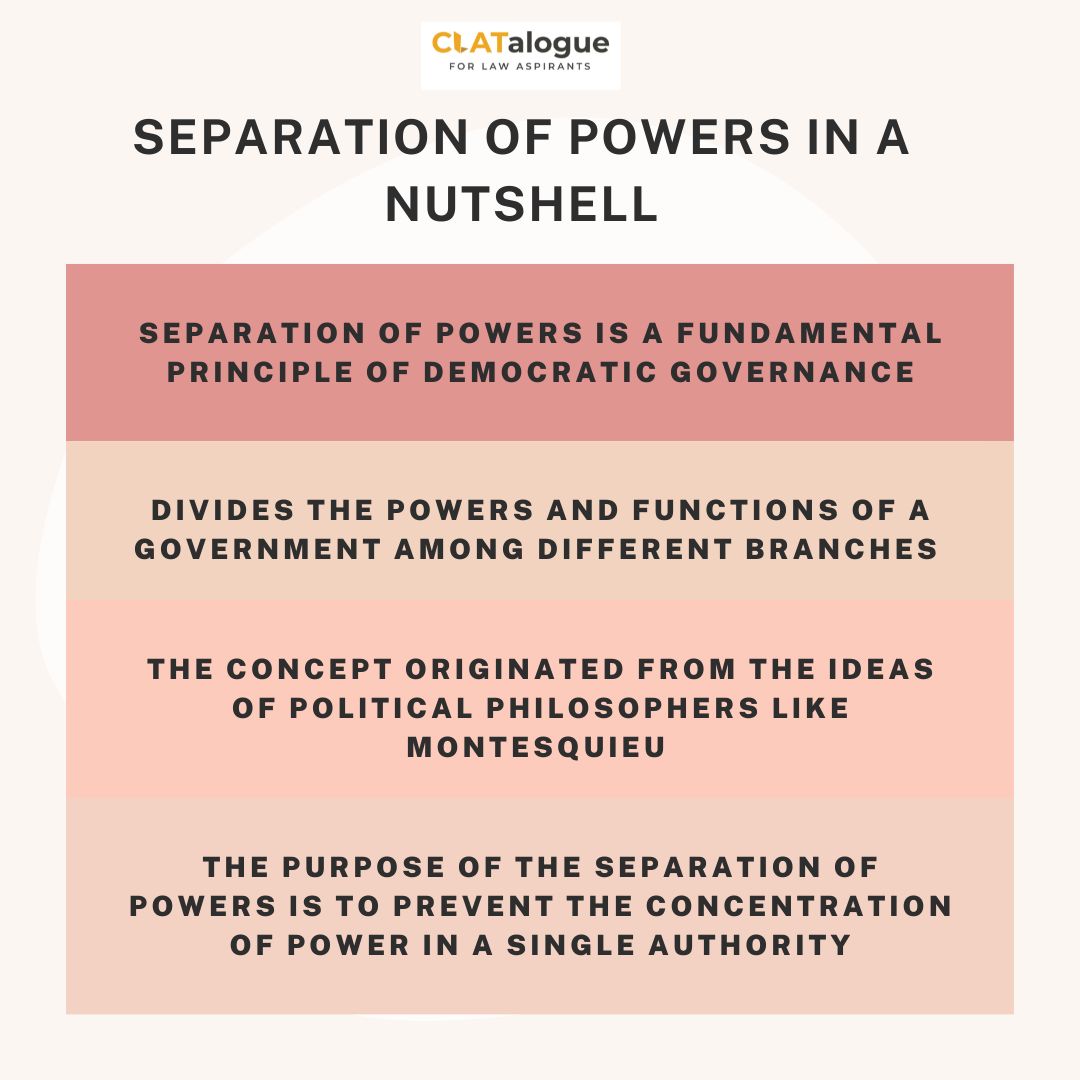
Separation of powers is a fundamental principle of democratic governance that divides the powers and functions of a government among different branches or institutions. The idea that government powers should be divided among separate and distinct authorities has a long history in western constitutionalism.
John Lock observed the need for separation of powers as early as 1660. He focused on the nature of human beings to grasp power and the danger of such power vesting absolutely in one person or institution. Thus arose the notion of the danger of “centralization” of power and the need to keep a check on it.
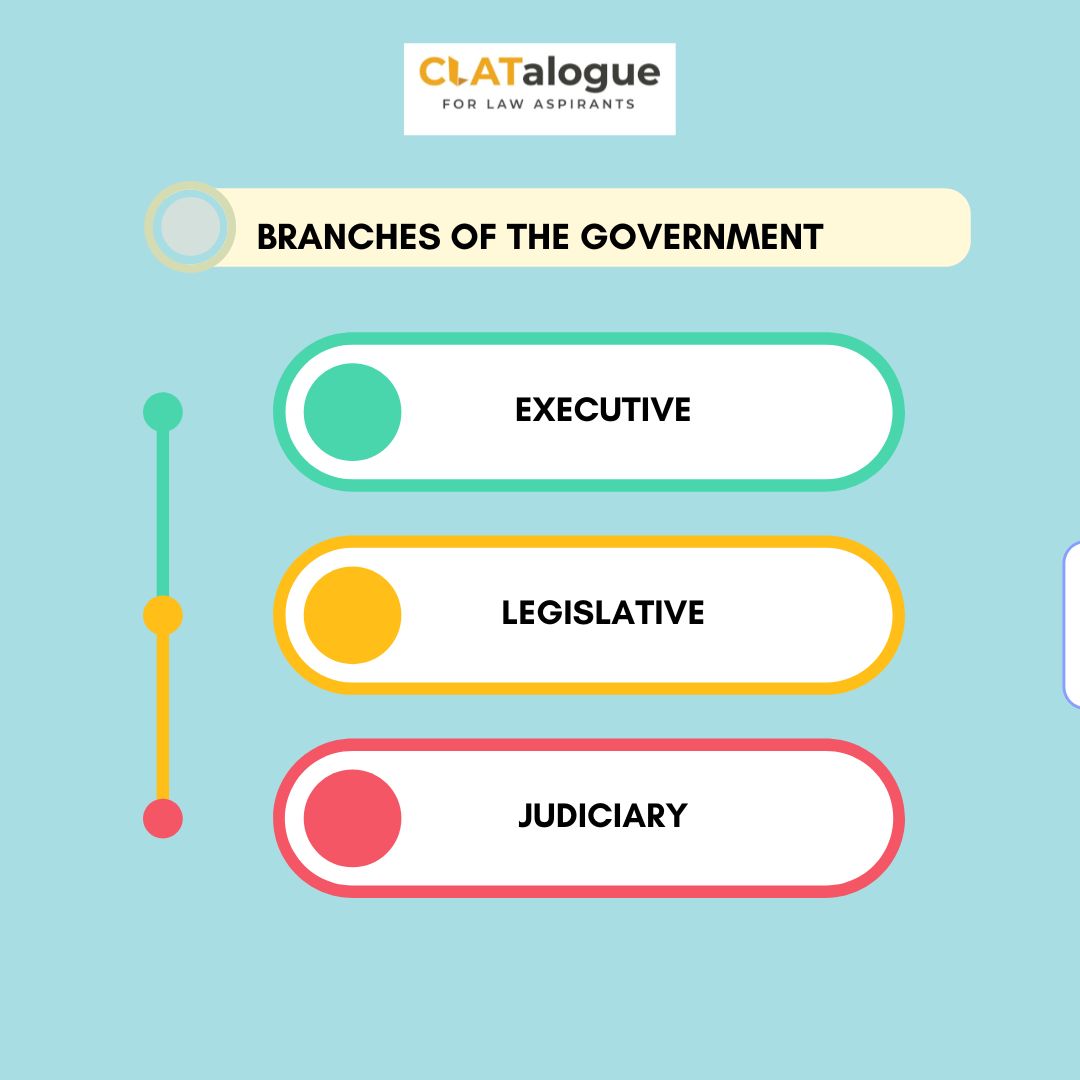
Understanding the Three Branches
Legislature: The Indian Parliament, as the legislative branch, is tasked with making laws. It is responsible for creating policies, formulating laws that govern the country, and overseeing the executive.
Executive: The executive branch, led by the President and encompassing the Prime Minister, the Council of Ministers, and civil services, is responsible for implementing laws. The executive translates legislative intent into action, enforcing laws and managing state affairs.
Judiciary: The judiciary in India, headed by the Supreme Court, is responsible for interpreting the Constitution, resolving disputes, and protecting citizens’ rights. It functions independently, with the Supreme Court, High Courts, and subordinate courts ensuring the rule of law.
When the legislative and executive powers are united in the same person or in the same magistrate or body, it places significant power in the hands of a single person, which is prone to abuse. Again, if the judicial power is not separated from the legislative and executive powers, there can be a lack of checks and balances, leading to an accumulation of power and potential abuses of authority.
Were it joined with the legislative power, the life and liberty of the subject would be exposed to arbitrary control, for the judge would then be the legislator. Were it joined with executive power, the judge might behave with violence and oppression. The placing of all three powers on the same person might pave the way for a totalitarian regime.
Montesquieu’s writings considerably influenced the views and thoughts of the framers of the Constitution of the United States when they gathered to draft the American Constitution.
Thomas Jefferson, one of their founding fathers and the third President of the US, was an ardent proponent of the doctrine of separation of powers in the context of government functioning.
About 60 years before the American Constitution was drafted, the British introduced in 1688 the Bill of Rights, one of its characteristic features being the separation of powers between the King and Parliament and the King and the common law courts. The makers of the American Constitution adopted the concept and fitted it into their written Constitution.
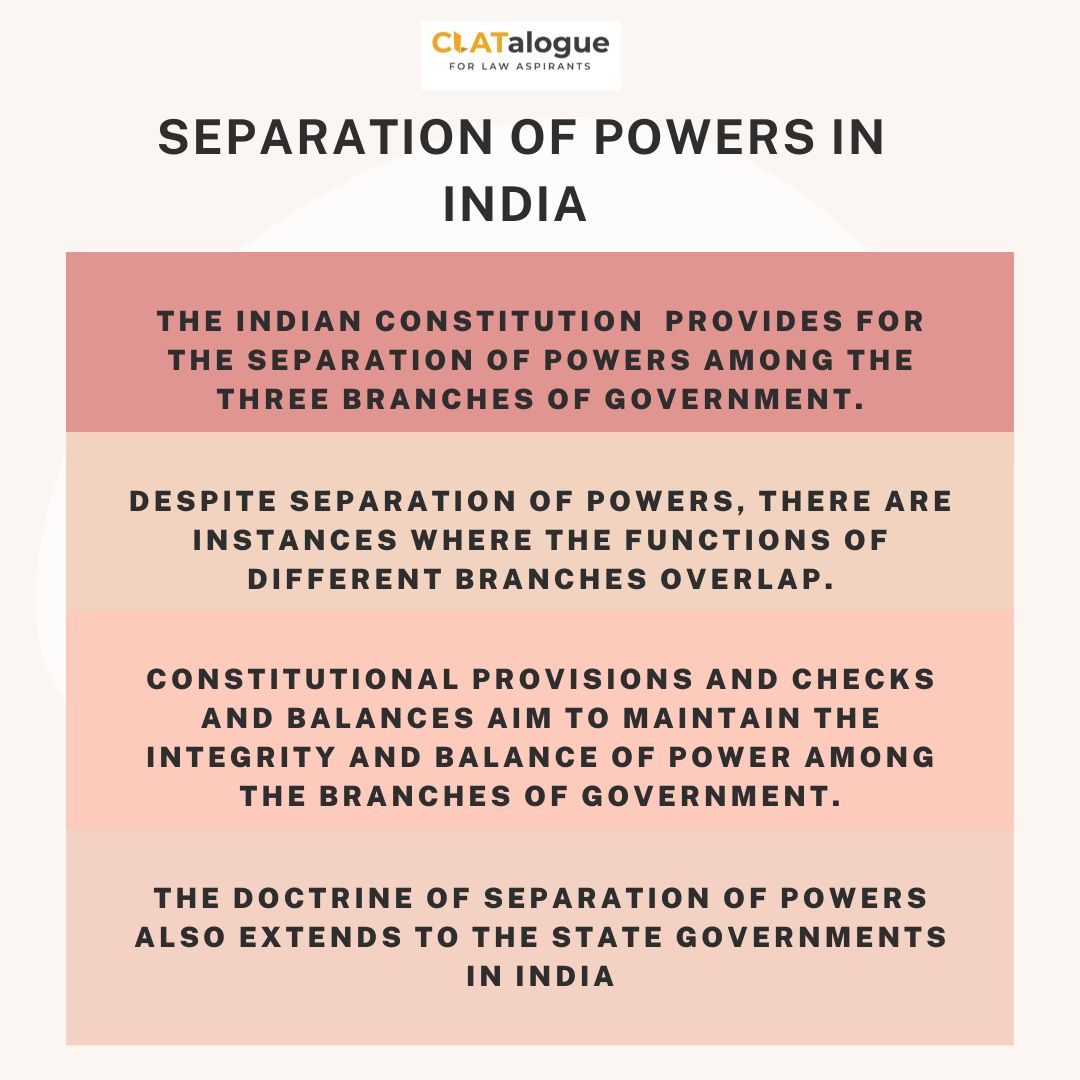
While India does not adopt a strict separation of powers, the Constitution establishes a clear demarcation of powers and responsibilities. Articles 50 and 121-122 highlight this division, advocating for an independent judiciary and limiting the interference of one branch in the functioning of another.
Doctrine of Separation of Powers
The objective behind following separation of powers is:
Prevention of tyranny
Efficiency of administration.
There are two views about the doctrine of separation of powers in the USA:
Formalistic View:
It demands adherence by each branch, meaning thereby, as a command of the Constitutional text. Thus, this view expresses a strict separation of powers.
Functionalism:
Commands fidelity to the purposes of the distribution of powers. The Constitution’s distribution of powers is violated only if one branch of the federal government aggrandises its power at the expense of another branch.
In short, functionalists view such SOP as a component of fulfilling constitutional goals.
Doctrine of Checks and Balances
It signifies the division and dispersion of a specific power between the branches, i.e., a constitutional effort to ensure that the system will be able to guard against usurpation of authority by any one branch.
Difference between Separation of Powers and Checks and Balances
The principle of Separation of Power suggests three autonomous entities working independently while the Doctrine of Checks and Balances suggests overlapping functions in which each branch is able to introduce laws to check the power of other branches.
The principles of separation of powers and checks and balances are not fixed doctrines but rather adaptable and fluid components of constitutional administration. The maintenance of a harmonious and effective system of governance is contingent upon the continual interpretation and application of these principles.
The constitutional framework is best understood as a scheme that embodies a partial rather than a complete separation of powers and supplements the separation by creating devices for each branch. However, the purpose of both of these concepts is to :-
Dr. Ambedkar also pointed out during the debates in the Constituent Assembly that a constitution is based on certain tacit assumptions concerning the fundamentals; for example, no constitution lays down that the executive is bound to carry out the laws made by the legislature. It is assumed that they will perform their duty of overseeing the proper implementation of laws and policies adopted by the legislature.
The Constitution neither contemplates a superorgan nor confers overriding authority on any organ. No organ has any authority to supervise the exercise of powers and functions by another unless the Constitution strictly permits it; otherwise, the constitutional balance will be greatly disturbed.
The basic foundation of our Constitution is the accountability of the state to the people, who are the real masters. The accountability of the executive to the people at large is enforced through their representatives in the House of People. The legislatures also have the obligation not to exceed the jurisdictional limits provided in our organic law.
The Constitution and its preamble are the guiding lights so far as the Judiciary is concerned, but there is no scope for enforcing its accountability to the Constitution except judicial conscience and rectitude. For the same reason, a robust system of checks and balances has become very important.
If any organ of the state arrogates to itself any power, having a sanction only in terrorem, which under the constitutional scheme belongs to any other organ, it will cause a serious imbalance in our constitutional set-up.
Conclusion
The principle of separation of powers and the doctrine of checks and balances are essential components of upholding a democratic and equitable system of governance. In summary, these principles are integral to maintaining a balanced political structure.
Although the genesis of this notion can be traced back to the works of philosophers such as Montesquieu, it has been incorporated into the constitutional structures of several countries, including India and the United States.
Within the Indian context, it is noteworthy that while the Indian Constitution does not overtly stipulate a comprehensive separation of powers, there is a clear demarcation of the roles and authorities of the executive, legislature, and judiciary.
The judiciary has been bestowed with the duty of safeguarding the Constitution and verifying that the conduct of the other governmental branches conforms to the constitutional stipulations.
Notwithstanding, there have been occurrences where the principle of separation of powers has been confronted with challenges and critiques. Certain legal cases, such as the Jagadambika Pal and Jharkhand Assembly cases, have prompted apprehension regarding the judiciary’s intrusion into the jurisdiction of the legislature.
Maintaining a nuanced equilibrium between the authorities and obligations of every branch of government while upholding the preeminence of the constitution is of utmost importance.