Delhi Government vs. Centre Dispute
Edit
TABLE OF CONTENTS
Introduction
Historical Context of the Tussle
Reasons for the Tussle
Resolving the Conflict
Introduction
The relationship between the Central Government and state governments in federal countries is often marked by a complex interplay of powers and responsibilities. In the case of Delhi, a Union Territory with a special status, the tussle between the Central Government and the Delhi State Government has been subject to intense debate and legal scrutiny.
This post aims to provide a comprehensive analysis of the legal aspects surrounding this ongoing conflict, focusing on key issues, constitutional provisions, and judicial interpretations.
Historical Context of the Tussle
The struggle between the Central Government and the Delhi State Government can be understood in the context of the demand for greater autonomy and representation for the residents of Delhi. Prior to the insertion of Article 239AA into the Indian Constitution, Delhi functioned as a Union Territory directly governed by the Central Government.
In the early 1990s, recognizing the need to address the aspirations of the people of Delhi for a representative government, the S Balakrishnan Committee was constituted. The committee was tasked with studying the issue and making recommendations to ensure greater autonomy and democratic governance for the city.
The committee’s findings emphasized the significance of empowering the residents of Delhi with a legislative assembly and a council of ministers. The objective was to provide a platform for elected representatives to voice the concerns and interests of the local population while also acknowledging the need for continued oversight by the Central Government.
As a result of the committee’s recommendations, Article 239AA was inserted into the Indian Constitution through the 69th Amendment Act in 1991. This provision granted Delhi a special status, distinct from other Union Territories, by conferring limited statehood.
It established a Legislative Assembly and a Council of Ministers for Delhi, providing a mechanism for the elected representatives to exercise legislative and executive powers within the defined scope.
The primary intention behind the insertion of Article 239AA was to strike a balance between democratic governance and central oversight. It aimed to ensure that the residents of Delhi had a platform to elect their representatives and actively participate in the decision-making processes that affect their daily lives.
At the same time, it recognized the importance of maintaining the integrity of national interests and crucial areas such as public order, police, and land, which remained under the purview of the Central Government.
However, the implementation and interpretation of Article 239AA have given rise to a tussle between the Central Government and the Delhi State Government. Differences in understanding the extent of powers, administrative control, and decision-making authority have led to conflicts and legal battles between the two entities.
Reasons for the Tussle
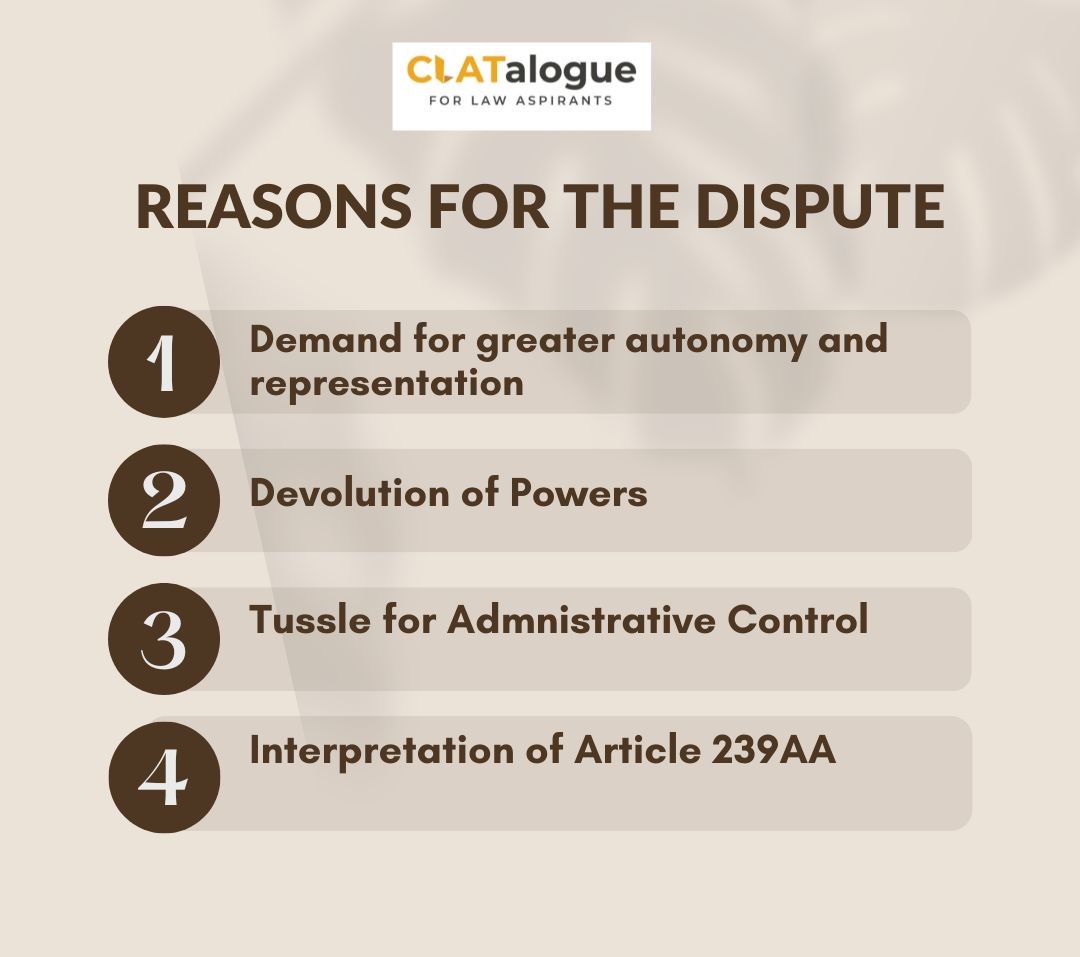
Administrative Control: The question of administrative control is one of the key causes for the continuous conflict between the Central Government and the Delhi State Government.
The Union Territory’s decision-making process is dominated by the Lieutenant Governor (LG), who represents the Central Government. This includes the recruitment and transfer of bureaucrats, which has resulted in disagreements and fights over executive authority and decision-making autonomy for the elected administration.
The Delhi State Government contends that as democratically elected representatives, they should be able to appoint and remove employees in order to efficiently implement its policies and programmes. They argue that the LG’s ability to veto their choices undermines their mission and impedes the government’s effective operation.
The Central Government, on the other hand, contends that the LG, as the President’s and Union Government’s representative, should have authority over administrative concerns in order to promote effective administration and the integrity of national interests. They say that the LG’s function is critical in establishing checks and balances and preventing the elected administration from abusing its authority.
Devolution of Powers: The devolution of powers and fiscal autonomy to the Delhi State Government is another key topic of dispute. The State Government has lobbied for increased control over its finances, taxation, and spending, with the goal of exercising more independence in these areas.
The Central Government, on the other hand, retains responsibility over key institutions such as the Delhi Development Authority and the Delhi Police. This affects the authority and ability of the state government to properly implement its programmes and goals. The Delhi State Government contends that more budgetary autonomy is necessary for good administration and regional development. They feel that more financial autonomy will allow them to better serve the unique needs and ambitions of the people of Delhi.
The Central Government, on the other hand, contends that some issues, like as public order, police, and land, necessitate centralised authority in order to safeguard the national capital’s security and well-being. They argue that maintaining control over these critical locations is essential for maintaining law and order.
Article 239AA Interpretation: The interpretation of Article 239AA has been a major issue of dispute in the conflict between the Central Government and the Delhi State Government. This section defines the Delhi State Government’s and the LG’s powers and responsibilities.
The Supreme Court’s decision in the matter of Government of the National Capital Territory of Delhi v. Union of India in 2018 clarified several points of the interpretation. It emphasized that, barring extraordinary situations, the LG should not defer decisions and should act on the assistance and advice of the Council of Ministers. This verdict affirmed democratic values as well as the significance of the elected government’s role in decision-making.
However, disagreements remain about the level of authority conferred in the LG and the elected government. The meaning of the clause is still up for debate, resulting in continuous disagreements and legal challenges.
Resolving the Conflict
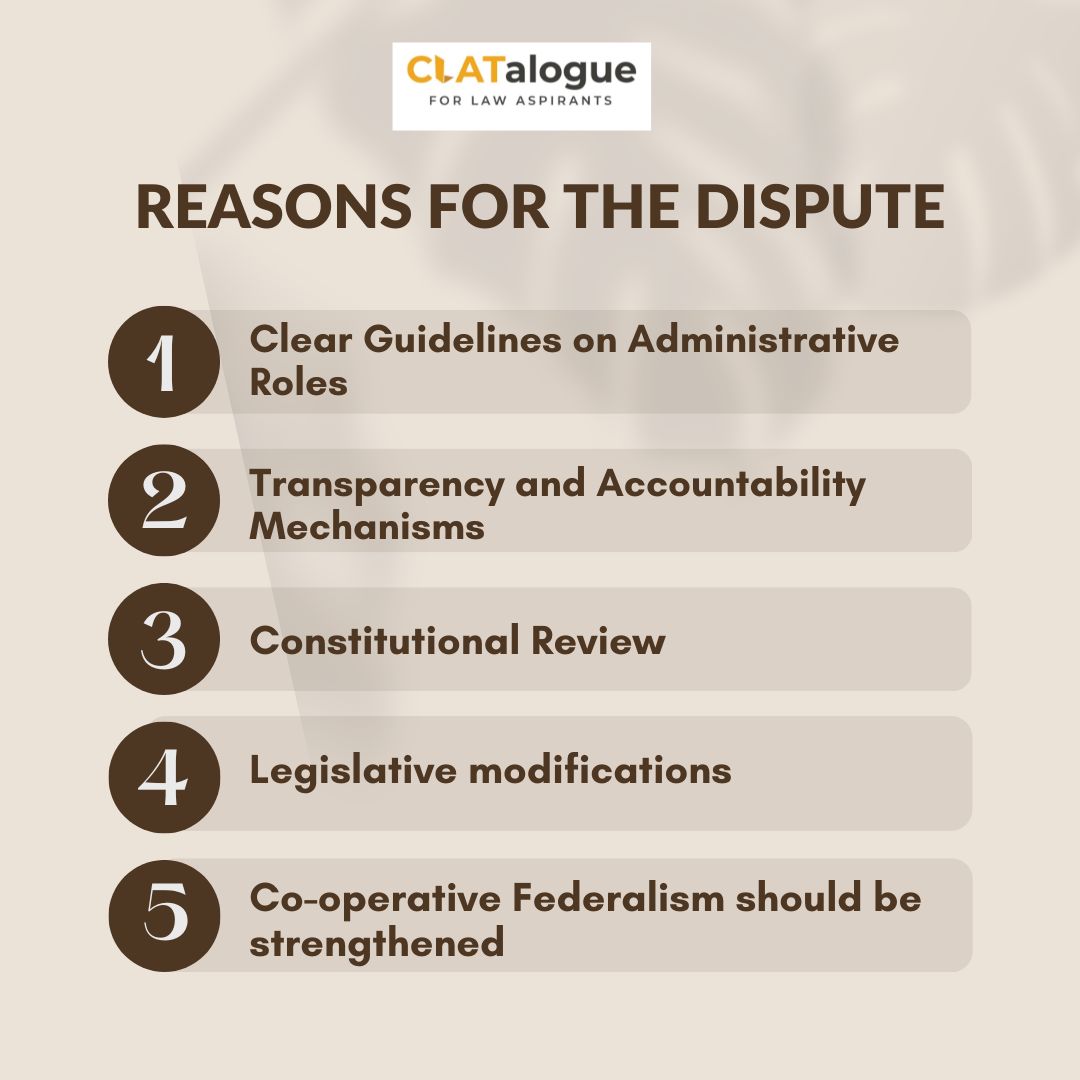
Several methods might be explored to address the current conflict between the Central Government and the Delhi State Government:
Clear Guidelines on Administrative Roles: To mitigate conflicts over administrative control, it is crucial to establish clear and unambiguous guidelines on the roles and responsibilities of the LG and the elected government.
These guidelines should clearly delineate the areas where the LG has decision-making authority and where the elected government holds autonomy. It should be ensured that these guidelines strike a balance between the need for central oversight to safeguard national interests and the elected government’s autonomy to implement its policies and programs effectively.
Transparency and Accountability Mechanisms: To foster trust and accountability, robust transparency and accountability mechanisms should be instituted. Both the Central Government and the Delhi State Government should ensure transparency in decision-making processes, including the disclosure of relevant information, and be accountable for their actions. This can be achieved through mechanisms such as regular reporting, public disclosure of information, and independent audits.
Constitutional Review: Given the evolving nature of the relationship between the Central Government and the Delhi State Government, a comprehensive review of the constitutional provisions can help provide clarity and address the root causes of the struggle.
This review should involve all relevant stakeholders, including legal experts, policymakers, and representatives from both governments. It should aim to examine the distribution of powers, the scope of administrative control, and the interpretation of Article 239AA to ensure a harmonious and effective governance framework.
Legislative modifications: Legislative modifications may be proposed if they are judged appropriate to establish a clearer and more complete framework for the interaction between the Central Government and the Delhi State Government.
These modifications should address contentious issues such administrative control, devolution of powers, and the interpretation of Article 239AA. The revisions should be governed by cooperative federalism principles, providing a balance between the elected government’s regional autonomy and the Central Government’s overriding interests.
Co-operative Federalism Should Be Strengthened: Both the Central Government and the Delhi State Government should strive aggressively to enhance the notion of cooperative federalism. This may be accomplished via improving teamwork, coordination, and mutual respect.
To maintain good governance and to assist conflict resolution, regular meetings, discussions, and shared decision-making procedures should be encouraged. Proactive discussion and a problem-solving attitude will aid in the development of trust and understanding between the two entities.
These processes should be developed to give prompt and equitable outcomes while taking both the interests of the Central Government and the Delhi State Government into account.
The Central Government and the Delhi State Government may pave the road for a more peaceful and cooperative partnership by following these proposals. Resolving the conflict will need a collective commitment to democratic values, competent government, and the general well-being of the people of Delhi.
Subscribe for updates
Join 10,000+ subscribers.
SA
Samridhi M
Contributing author
Have a doubt about this?Ask Doubts

