
Frequently Asked Questions on CLAT 2020
Frequently Asked Questions on CLAT 2020
22 November 2019 is the date when a certain press release started doing the rounds on all the news websites and social media. It was the press release stating that the CLAT pattern has been changed.

It was not the changes that we saw over the years like online or offline mode of examination or negative marking etc. This notification completely changed the examination.
The changes that followed were:
- The number of questions has been reduced from 200 to 120-150.
- All questions will be comprehension based.
- Questions from Quantitative Techniques, English, Current Affairs, Deductive Reasoning and Logical Reasoning will be asked.
- The paper will test the aptitude of the candidate and not the memory.
- Maths is now Quantitative Aptitude, the students can expect questions based on graphs, pie charts and tables.
- Logical Reasoning has not been changed and it is still the same logical reasoning.

This left everyone confused as there was no clarification or model test paper or any form of detail. The students were badly affected and they started asking questions from their mentors.
Frequently Asked Questions on CLAT 2020
- What has changed in CLAT?
- What will CLAT 2020 look like?
- What is the syllabus for CLAT 2020?
- Which books to prefer for CLAT 2020 preparation?
- Clarification on Maths and Legal Aptitude now?
- How to prepare for CLAT 2020
Who was affected?
Everyone who has anything to do with CLAT. Whether it is an aspirant or a teacher. However, we forget that there are different categories of students, students at different dentures of CLAT preparation.
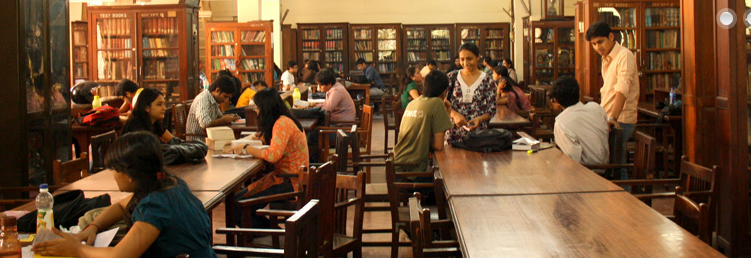
The most badly affected category is the CLAT aspirants who prepared for 2 years and could not make it so dropped to take one last attempt at CLAT 2020.
The stakes for everyone is high and some can’t afford a second chance at CLAT but this category has the most to lose if their preparation goes south.
What is the problem?
The basic problem is not the change itself. Some might disagree but it’s not even the timing of the change. It is the way in which it was executed.
If the CLAT Consortium was to release their resolution, they should have backed the same with a detailed clarification subject-wise. They should have also released model papers or guides for this new pattern as soon as word of change got out.
The 20-day delay after dropping the news has cost the aspirants 20 complete days of preparation if nothing else.
The changed pattern applies to everyone, agreed. Therefore the 20-day loss is for everyone, not to mention the stress and mental pressure it brought on the students.
A little relief came in the form of a Youtube video which Prof. Faizan Mustafa, Ex-President of CLAT Consortium, released. It talked about the reasoning behind implementing change and also assured students that it was for the best.
Even though it gave temporary relief, the students are still worried about the exam since no model paper has been released by the CLAT Consortium.
Preparation
The students are afraid that their preparation may be heading in the wrong way and after spending much time on it, they will realise all this time their understanding was wrong.
Many websites and coachings, including CLATalogue, have been releasing videos and articles interpreting what the press release said or Prof. Mustafa’s video but all of this will go into vain if the model papers and clarifications arrive a little too late.
Who is organising CLAT 2020?
In the old days, CLAT was organised by a single NLU on a rotation basis. Every year the baton would be passed from one to another.
Now, after the CLAT Consortium made, the exam is conducted by this body itself. The logistics are handled by a single NLU though.
This year the convenor of CLAT 2020 is Prof. Balraj Chauhan. He is the first Vice-Chancellor of Dharmashastra National Law University, Jabalpur. Before joining Dharamshastra National Law University Prof Chauhan has served as Director, Amity Law School, Lucknow, Vice-Chancellor of Dr Ram Manohar Lohia National Law University, Lucknow and NLIU, Bhopal.

Prof. Balraj Chauhan
As Prof. Chauhan is the convenor, the logistics will be dealt with by DNLU, Jabalpur.
What can students do?
The first and foremost thing that the students can do it keep up the preparation. A subjectwise suggestion list is given below which may be followed
This is the only section which remains completely untouched by the changes in the exam. There are no changes in this section whatsoever, not even minor changes. Although, if the number of questions decreases for the whole paper, it will happen so for this section as well.
However, the change will be proportional so in sheer numbers, there is no change at all.
In order to prepare well and score good in this section, the candidate needs to practice as much as they can. No amount of theoretical understanding of this subject can ensure good marks in this section.
- The candidates should refer the past year papers of CLAT to solve the different types of LR questions that they have asked till date.
- Sample and Past year papers of LSAT, as well as AILET, should be solved since their logical reasoning section is comparatively tougher than CLAT.
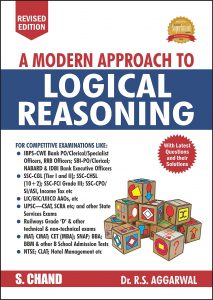
- To get a complete hold of LR, one can solve the book by S.Chand. It has questions from various competitive examinations and difficulty levels.
Current Affairs
The General Knowledge section has been replaced by a complete Current Affairs section. This means, there will be no static GK questions.
This also means that unlike the past, current affairs questions will be asked from the whole previous year. These questions need not be solely from the legal arena.
- A thorough reading of a good national daily is highly advised and that notes be maintained for each day.
- While reading, special attention to the editorial sections since they are based on the current affairs and polish vocabulary of the candidate.
- One good magazine like Competition in Focus or Outlook can be referred on a monthly basis, to sum up, the affairs of the month.
- Watching an hour of news daily to know about the daily events of the world is advised. Please do not waste time over prime time debates, instead, go for Doordarshan news or All India Radio News.
English
This section is pretty much the same as before with a small edit of solely comprehension based questions. Comprehensions were a part of this paper earlier as well, now they have covered all of it.
- Read various articles and blogs on Business, Politics, Economics and Law to be familiar with the topics which may be a part of the comprehension in the exam.
- Try to read faster, time your reading and make sure to retain most of what you read.
- Solve the past year papers of LSAT and GMAT (Comprehension section only).
- A good resource will be the LSAT and GMAT guides.
Deductive Reasoning and Quantitative Techniques
While these subjects have been a part of several competitive examinations and entrances, including LSAT, these are new additions to CLAT.
As complicated as they sound, they are simply different sub-headings of Reasoning paper. Eg: Syllogisms have always been a part of the LR section in CLAT, they are also a part of deductive reasoning.
We can’t be certain about the type of questions they will be asking in these sections unless official model test papers come out. There are, however, several things the candidates can do to be ready for whatever comes their way.
Popular deductive reasoning questions
- Comprehending the basic structure of a set of relationships by determining a complete solution to the problem posed (for example, an acceptable seating arrangement of all six diplomats around a table)
- Reasoning with conditional (“if-then”) statements
- Inferring what could be true or must be true from given facts and rules
- Inferring what could be true or must be true from given facts and rules together with new information presented in hypotheticals
- Recognizing when two statements are logically equivalent in the context.
Who to contact for more Information?
The students can approach the following in case they need more information on the Frequently Asked Questions CLAT 2020.
CLAT Consortium
Call on the below-given numbers in office timings and ask your questions. This is the number of Helpdesk for students.
+91 97415 21069, 94825 67257
DNLU, Jabalpur
Since Prof. Chauhan is the convenor of CLAT 2020, you can approach his office if the CLAT Consortium does not attend your queries.
DNLU can be reached on 076126 02222.
Please remember that Prof. Chauhan might not be always available. You may ask for his email or get your message noted and call back again at a given time.
Prof. Faizan Mustafa
Prof. Mustafa was the President under which the press release came out. You may direct your questions to him and wait for his response.
mustafa.faizan[at]gmail.com
Did we answer your Frequently Asked Questions on CLAT 2020?
Subscribe for updates
Join 10,000+ subscribers.
AD
Aditya Anand
Contributing author
Have a doubt about this?Ask Doubts
